
United States, California, and Sonoma County History related to Developmental Disabilities
The Sonoma State Developmental Center was one of six large facilities operated by California to provide residential care for individuals with physical, developmental disabilities, or mental illness.
Originally, the Home for the Care and Training of Feeble-Minded Children opened in its Eldridge location in 1891. Over its long history its name was changed several times. In 1915 it became the California State Home, in 1953, the Sonoma State Hospital. By 1965 California housed 13,500 people with disabilities in four state hospitals. In 1985, 104 years after its original opening, it was renamed the Sonoma Developmental Center.
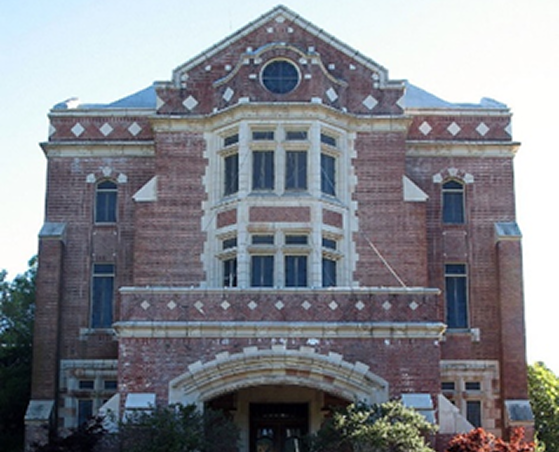
Administration Building Sonoma Developmental Center
In 1969, in California, the Lanterman Mental Retardation Services Act was passed. One of the primary focuses of that Act was to create a system of Regional Centers to provide community-based services to support individuals who were in danger of being placed in state hospitals. In 1977 the Lanterman Developmental Disabilities Services Act, the “Lanterman Act”, expanded Regional Center services to include other developmental disabilities, including cerebral palsy, epilepsy, autism and other neurological disabling conditions. The Act mandated that an individualized program planning (IPP) process replace the traditional problem-oriented record.
In 1975 the Federal Developmentally Disabled Assistance and Bill of Rights Act was passed. The law provided a federal definition for the relatively new term “developmental disabilities” which included mental retardation, cerebral palsy, epilepsy, autism and dyslexia. It specified that these conditions originate prior to age 18, were expected to continue indefinitely, and constitute a substantial handicap. The Act articulated findings that people with developmental disabilities have a right to appropriate treatment, services, and habilitation in the least restrictive setting that maximizes developmental potential, and specified that public funds should not be provided to any residential program for people with developmental disabilities that conflicts with, and does not meet, the minimum standards for nutritious diet, medical and dental services, prohibition of physical restraints, visiting rights for relatives, and compliance with fire and safety codes.
1975 also saw the Education for All Handicapped Children Act (Public Law 94-142), or the EHA signed into law. The EHA guarantees a free and appropriate public education, or FAPE, to each child with a disability in every state and locality across the country. The purpose of the law was to assure that all children with disabilities have available to them a free appropriate public education which emphasizes special education and related services designed to meet their unique needs and to protect the rights of children with disabilities and their parents. The Individual Educational Plan (IEP) was introduced into school systems.
The 1986 reauthorization of the EHA addressed early intervention and mandated that individual states provide services to families of children born with disabilities from birth.
The 1990 reauthorization changed the law’s name from EHA to the Individuals with Disabilities Education Act, or IDEA. It also added traumatic brain injury and autism as new disability categories. Additionally, Congress mandated that as a part of a student’s individualized education program (IEP), an individual transition plan (ITP) must be developed to help the student transition to post-secondary life.
The IDEA provided guidelines for Special Education evaluations. Evaluations must use a variety of assessment tools and strategies to gather relevant functional, developmental, and academic information about the child, including information provided by the parent. The IDEA requires school systems to ensure that the evaluation is sufficiently comprehensive to identify all the child’s special education and related service needs, whether or not commonly linked to the disability category in which the child has been classified.
In California, in 1985, in the Association for Retarded Citizens v. California Department of Developmental Services (DDS) et al., the California Supreme Court rules that the Lanterman Act “defines a basic right and a corresponding basic obligation; The right which it grants to the developmentally disabled person is to be provided with services that enable him to live a more independent and productive life in the community; The obligation which it imposes on the state is to provide such services.” These services are to be determined through the individual program planning (IPP) process and provided as an entitlement. In 1989 the California State Hospitals’ (now referred to as State Developmental Centers) population was still 6,700.
In 1992 the Lanterman Act is amended to expand the range of services and supports available to consumers and families and ensures the right of consumers to make choices about where and with whom they would live, their relationships, the way they spend their time, and their future.
In 1993 thirteen state developmental center residents and their families filed a class action lawsuit against DDS and four Regional Centers, with the goal of ensuring that persons with developmental disabilities have access to quality, stable, individually tailored, and integrated community living arrangements of choice (William Coffelt, et al. v. Department Of Developmental Services, et al). An out-of-court settlement results in the adoption of the Community Living Options Initiative calling for the movement of 2,000 people from developmental centers into the community over five years and the prevention of future inappropriate admissions. In 1997 there are approximately 4,100 individuals still residing in state Developmental Centers.
Within Sonoma County the educational agency that was increasingly responsible for providing Special Education services to the residents of the Sonoma Developmental Center who were transitioning to off-grounds school programs and community placements was the Sonoma County Office of Education (SCOE). Working with school districts, SCOE established Special Day Class programs on regular school campuses and community settings to serve students from preschool through post-secondary levels. Among the challenges was developing instructional programs and support resources to integrate assistive technology into the school programs and lives of this diverse student population.
On December 31, 2018, the Sonoma Developmental Center was officially closed.
At its height the California Department of Developmental Services system housed over 13,000 people with severe disabilities in four state hospitals. Over the course of almost 130 years, starting way back with the Home for the Care and Training of Feeble-Minded Children in 1891, this system served an estimated 70,000 individuals in placements in the California state system, with more than a few spending their entire lives in those institutional placements.
California’s history related to the treatment of the disabled had paralleled the history of individuals with significant physical and developmental disabilities across the United States. The evolution of those systems and services led us to a time and place where there was a need for a better way to meet the educational, training, and therapy needs of those who had previously been isolated in institutions and hidden from the public.