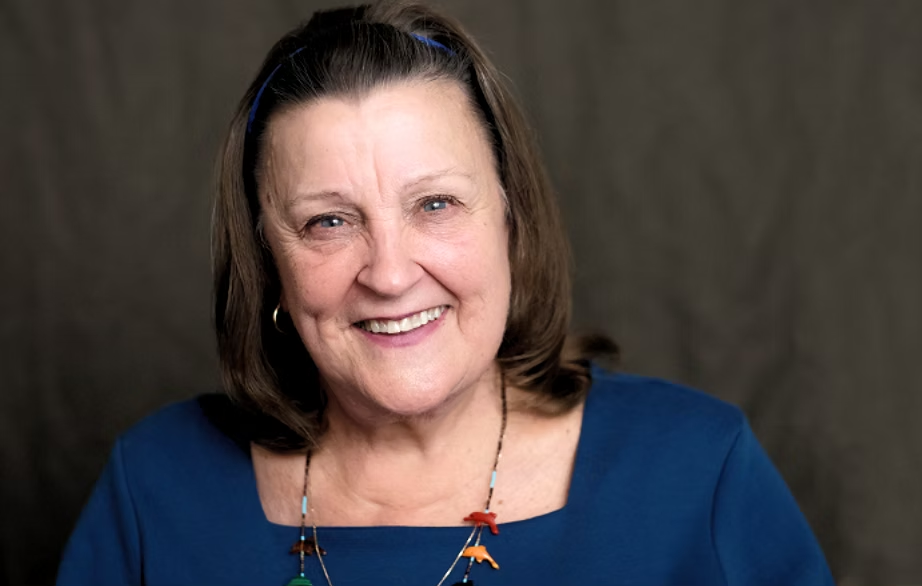
SETT and Lifespace Access - AT Pioneers heading in the same direction
SETT's Origins
In 1995, Dr. Joy Zabala published a foundational paper in the area of assistive technology assessment and device selection, The SETT Framework: Critical Areas To Consider When Making Informed Assistive Technology Decisions.
This paper was designed to address questions about which students need assistive technology, what kind of technology is needed, and who is involved in making these decisions. It proposed the SETT framework as a systematic approach to making decisions regarding the provision of assistive technology devices and services for students with disabilities.
The SETT framework provided a set of questions across four quadrants for consideration when making assistive technology purchasing decisions.
Student
- What does the Student need to do?
- What are the Student’s special needs?
- What are the Student’s current abilities?
Environment
- What materials and equipment are currently available in the environment?
- What is the physical arrangement?
- Are there special concerns?
- What is the instructional arrangement?
- Are there likely to be changes?
- What supports are available to the student?
- What resources are available to the people supporting the student?
Tasks
- What activities take place in the environment?
- What activities support the student’s curriculum?
- What are the critical elements of the activities?
- How might the activities be modified to accommodate the student’s special needs?
- How might technology support the student’s active participation in those activities?
Tools
- What no tech, low tech, and high-tech options should be considered when developing a system for a student with these needs and abilities doing these tasks in these environments?
- What strategies might be used to invite increased student performance?
- How might these tools be tried out with the student in the customary environments in which they will be used?
Based upon this strong foundation the SETT framework has remained a mainstay of the assistive technology (AT) and Augmentative and Alternative Communication (AAC) fields for more than thirty years.
Collaboration: A Necessity in AT Planning
Early on Dr. Zabala recognized that the SETT process was most effective when it was employed as a collaborative effort. In her later explanations she was emphatic about a collaborative approach.
“Collaboration: The SETT Framework is a tool that both requires and supports the collaboration of the people who will be involved in the decision-making and those who will be impacted by the decisions. Collaboration is not only critical for the SETT Framework; it is also critical to gaining the engagement necessary for effective implementation of any decisions.”
Dr. Zabala’s influence and contribution to the fields of assistive technology, Special Education, and learning expanded throughout her long career. Her doctoral dissertation provided the framework for the Quality Indicators for Assistive Technology (QIAT) and the grassroots, nationwide professional community dedicated to guiding the development, delivery, and evaluation of high-quality assistive technology (AT) services, in educational settings. She served as a member on the advisory board for the prestigious CAST (Center for Applied Special Technology), guiding the evolution of the Universal Design for Learning (UDL) from its original “Expert Learners” to its more expansive “Learner Agency” orientation.
Lifespace Access & SETT: Parallel Tracks to Similar Destinations
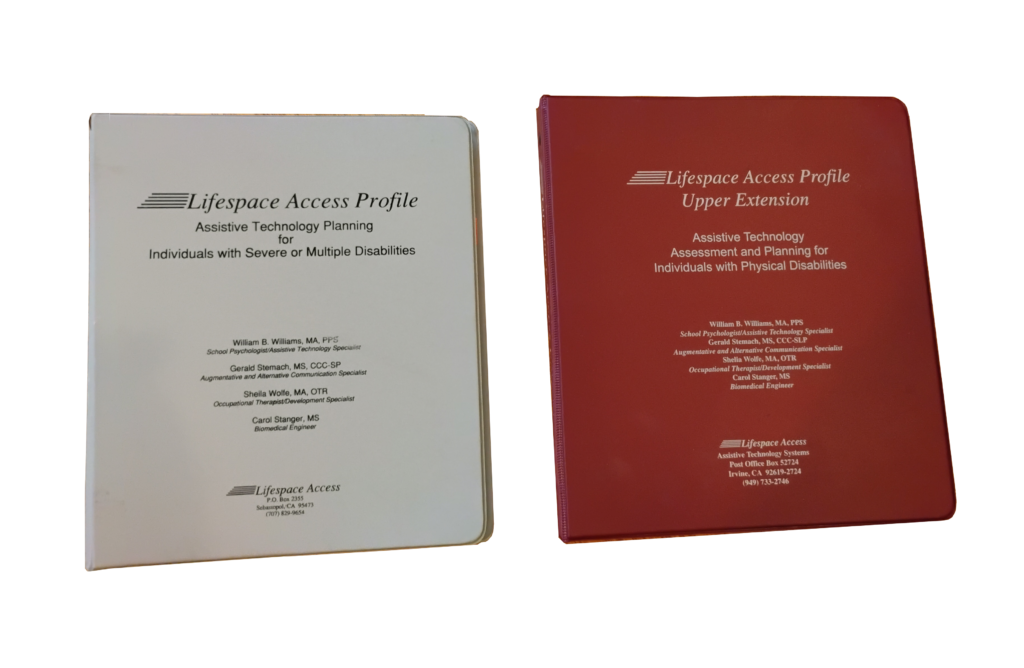
The early 1990’s was an exciting time for the emerging assistive technology field. The SETT framework was being established. The Lifespace Access team was building classroom programs and creating systematic instruments to integrate assistive technology into the educational programs of Individuals facing severe developmental and physical challenges. In 1993 the original Lifespace Access Profile was published, joined a year later by the Lifespace Access Profile – Upper Extension.
Dr. Zabala was doing pioneering work establishing a framework for device acquisition and the growing AT field. Lifespace Access had a decidedly more focused task.
We needed to provide very specific guidance for increasing the active participation in activities that would develop the physical, cognitive, and emotional resources of students in Special Day (Intensive Needs) classes serving students from Preschool through the Post Secondary level with severe, and in many cases profound, disabilities. We felt assistive technology could provide “curb-cuts” to the developmental processes for these populations.
Multidisciplinary teams: “Pick your partners!”
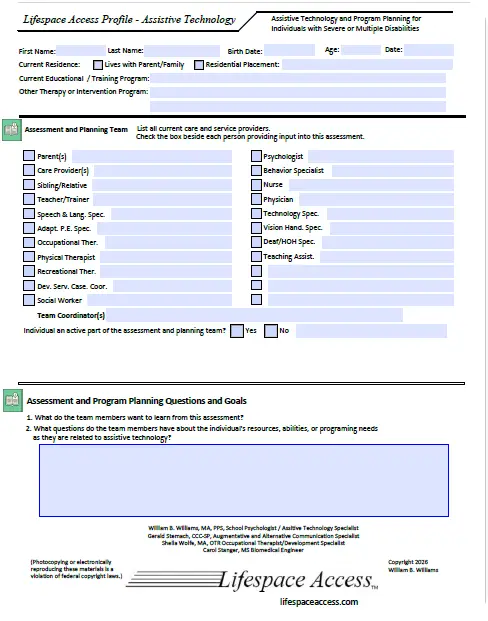
The SETT process advises collaboration of a multidisciplinary team is essential. The Lifespace Access Profile process leads off with directions about who should be on the “Team” and how to record membership.
From the first version of the LAP in 1993, operationalizing the multidisciplinary team approach has been our goal. It has proven to be the right approach.
(We recognize that our stance runs counter to the increasing fragmentation, specialization, and monetization across all fields serving Individuals with developmental, neurodevelopmental, physical, or affective challenges, but we would rather make “sense” than worry about making “dollars”.)
High Resolution Solutions: "Pick a Category and your Questions."
SETT’s eighteen questions provide excellent conceptual guidance. At Lifespace Access we needed larger sets of questions with much more granular focuses to guide the day-to-day instructional and therapy activities in our intensive needs classrooms.
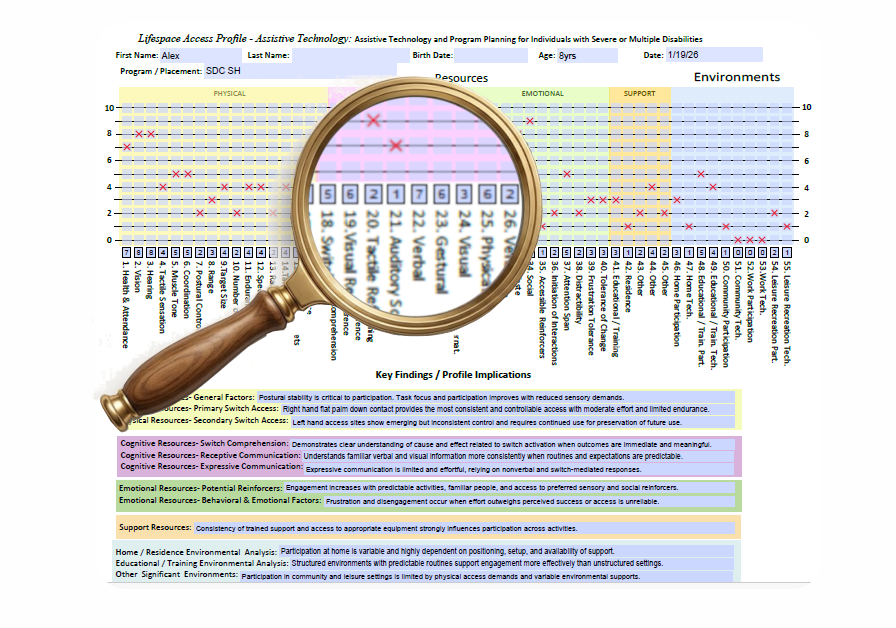
The Lifespace Access Profile – Assistive Technology (LAP-AT) includes 55 rating scales across the Physical, Cognitive, Emotional and Support Resource categories. The Lifespace Access Profile – Autism Spectrum Disorder Technology (LAP-ASD) has 47 ratings scale across those same categories.
Team Results & Planning: Recommendations and Specifications
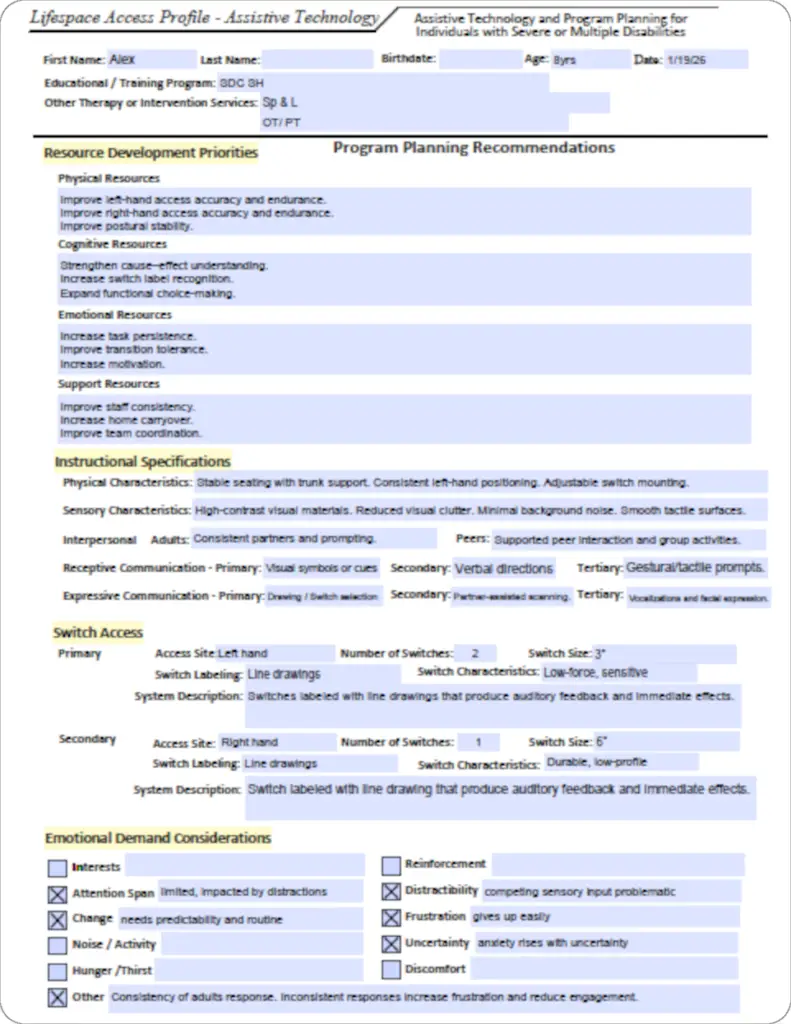
The LAP-AT leads the Team through a process that yields a detailed “blueprint” for the student’s future instructional program and therapy services. Little is left to chance or assumption. The plan identifies the skills and abilities that should be the program’s focus. Significant aspects of physical, sensory, social, and communicative aspects of the instructional setting are specified. Even the “affective” influences and demands of these activities and settings are addressed.
Resource Development Priorities
- Physical Resources
- Cognitive Resources
- Emotional Resources
- Support Resources
Instructional Specifications
- Physical Characteristics
- Sensory Characteristics
- Interpersonal
- Adults
- Peers
- Communication
- Receptive communication
- Expressive Communication
Switch Access
- Primary
- Access Site
- Switch Label
- Number
- Size
- Characteristics
- Secondary
- Access Site
- Switch Label
- Number
- Size
- Characteristics
Emotional Considerations
- Interests
- Attention Span
- Change
- Noise / Activity
- Hunger / Thirst
- Reinforcement
- Distractibility
- Frustration
- Uncertainty
- Discomfort
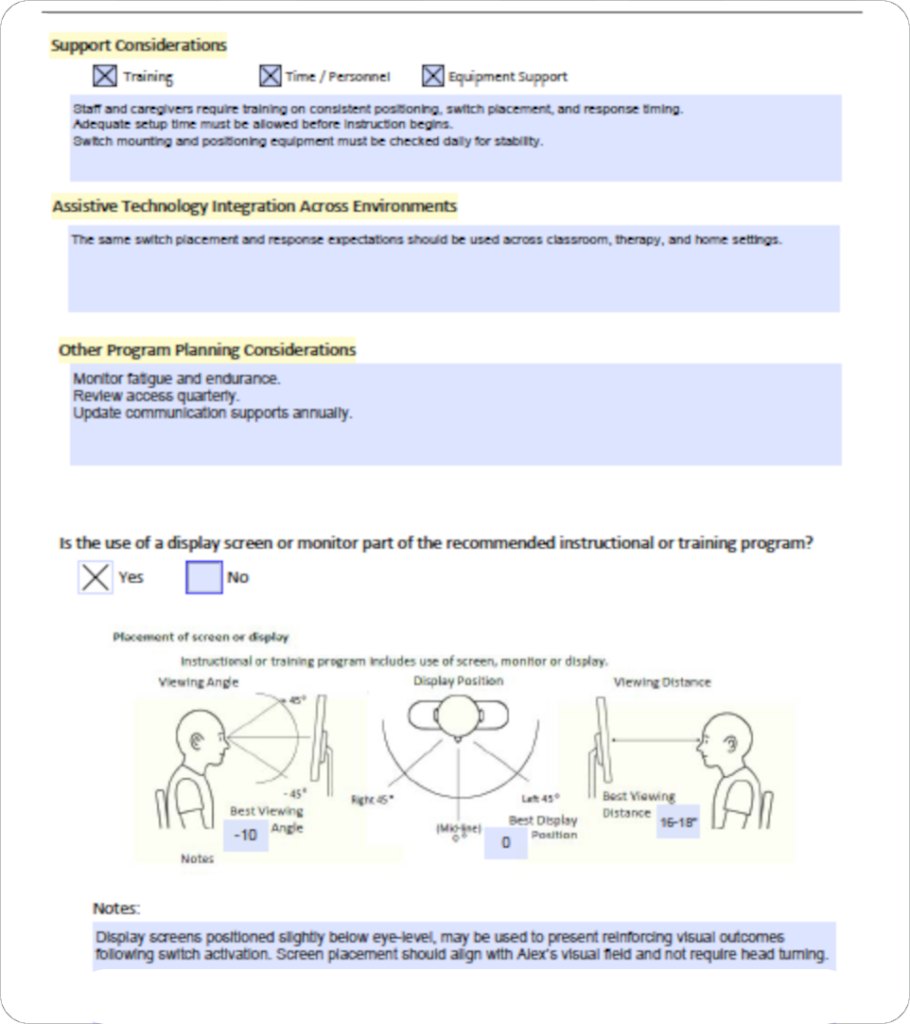
Support Resources
- Training
- Time / Personnel
- Equipment Support
Assistive Technology Use
Display Use
Long Journeys to a Common Goal
Over a career that spanned more than 40 years, Dr. Zabala’s work shifted from providing a systemic approach to AT hardware acquisition to championing a more expansive view of students, their resources, challenges, and futures. Her work influenced, and continues to influence, the expansion of Individual Agency via a Whole Person approach.
In the later stages of her long and distinguished career Dr. Zabala, made a now famous clarification of her guiding philosophy.
“I used to think I was passionate about assistive technology. What I’ve learned is that I’m very passionate about participation and learning. This is not about the technology. This is about people’s lives.”