Operationalizing CAST-Universal Design for Learning for Individuals with Severe Disabilities: The Lifespace Access -Learner Resources Model

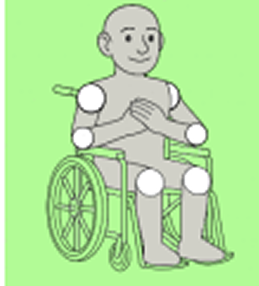
image use to show emotional resources
Emotional Resources

The UDL & LRM Connection

The Lifespace Access Learner Resources Model (LRM) and UDL 3.0 both prioritize learner agency and identity. While UDL 3.0 (released in 2026) expands into emotional capacity and belonging, the LRM has provided a functional framework for these emotional resource dimensions for individuals with severe disabilities since 1993.

UDL, We have been here waiting for you since 1993.

The Neuroscientific "Fingerprint"

In the early 1990s, Dr. David Rose, the neuroscientist who founded CAST and pioneered Universal Design for Learning (UDL), used the analogy of a fingerprint to understand learner variability. He wanted to map the uniqueness of what each individual brings to a learning activity. His early work focused on how three networks in the human brain (Affective, Recognition, Strategic) interacted in the process of learning. UDL proved to be a powerful tool for examining the dynamics of learning and for guiding the development of instructional activities and materials. 

shows a human finger print to show complexity of learning
Human Fingerprint

Over the ensuing 30-plus years Dr. Rose’s and CAST’s appreciation of all dimensions that truly impact access to learning and participation has expanded. The widening of the UDL model reflects that recognition. Expansion of the UDL model was inevitable when its application left the academic realm and started making contact with the real world.

UDL meets World

In one of my favorite anecdotes, that was documented in the 2014 Ed. magazine article,
“How Universal Design for Learning Became a Big Idea.”, Dr. Rose recounts the early days working with his longtime colleague Dr. Anne Meyer. (It may have been an early excursion into the territory where Lifespace Access was born.)

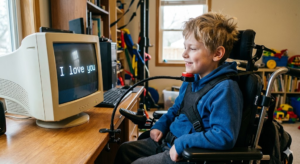
AI’s interpretation of Matt and his Message

“ Early on, the team had dramatic success with a young boy named Matt who had cerebral palsy and could only communicate by blinking his eyes and opening and closing his mouth. The school system assumed he was profoundly mentally disabled and was going to pay to have him institutionalized. But his mother believed her son was intelligent — he just couldn’t communicate it.

The team decided to teach him Morse code and gave him a switch connected to a computer that he could direct with his chin. “He learned Morse code in about 10 minutes,” Rose remembered. Then they taught him the alphabet.

Given that access, the first message Matt typed out to his mother was, “I love you.”

Eventually, Meyer digitized some books for him, setting up a program where he could have the book read aloud and could turn pages by clicking with his chin. “He was so excited to be enabled in this way. Sweat was just pouring off him as he was reading.” 

Matt’s was a very dramatic case, but it showed Rose and his colleagues how powerful an intervention computers could be. “That kind of transformation was what we were after — something that could make everything change,” Rose says in the article, ”CAST wanted the system to be elastic enough to fit all the kids.” UDL has grown to reflect that goal.

The Foundation of the Universal Design for Learning

UDL framework is built upon the foundation of three principles that reflect Dr. Rose’s neuropsychological background. Those core principles: Engagement, Representation, and Action & Expression.

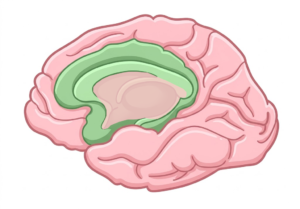
Illustration of the Human brain shaded with green to show the Affective neuro-network as used in the UDL
The Affective Neuro-Network: The "Why" of Learning
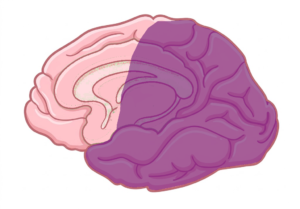
An illustration of the Human brain shaded to show the Recognition Neuro-Network as described in the UDL
The Recognition Neuro-Network: The "What" of Learning
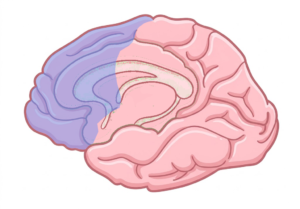
Illustration of the Human brain shaded to show the Strategic Neuronetwork as described in the UDL
The Strategic Neuro-Network: The "How" of Learning

To successfully engage these Networks in the Learning Process it is critical to provide:

The UDL describes how the application each of these Networks to the Learning Process requires:

What's new - UDL 3.0 (2026)

The truly exciting expansion of the UDL reflected in the 3.0, 2026, update is a critical new dimension focused on Identity and the “Who” of learning. 

This is a new dimension that a learner’s intersecting identities (culture, race, gender, etc.) directly impact how they perceive and engage with learning. In this important expansion of their model CAST and UDL are now acknowledging the importance of nurturing things like “Joy” and “Play” and feelings like Belonging and Empathy.

Beyond "Expert Learner" to "Individual Agency"

The definition of Lifespace Access: Active participation, with choice and control, in the activities that occur where we live, learn, work and play.” 

It has served as the foundation of our efforts since 1993. It goes beyond trying to create an “Expert Learner” to a place where every Individual has “Agency” within their Lifespace.

OUR FOUNDATION

The Learner Resources Model

Icon representing physical health and motor systems resources for IEP planning.

Physical Resources

Abilities and functioning mediated by the Individual’s general health, motor and sensory systems.

Icon representing cognitive capacity and mental processes for functional assessment.

Cognitive Resources

Abilities and functioning mediated by the Individual’s cognitive capacities and mental processes.  

Icon representing student preferences and emotional state resources.

Emotional Resources

Abilities and functioning mediated by the Individual’s preferences, tolerances and affective (emotional) state.  

Icon representing personnel, equipment, and training support resources.

Support Resources

Personnel, training, consultation, equipment, and material support for the Individual’s instructional program.

Origins of Two Models

Dr. Rose and CAST had a very different point of origin than Lifespace Access and the LRM. CAST & UDL started in the academic atmosphere of Harvard. Neuropsychology labs and lecture halls. Research papers and professional publications.

CAST was concerned with the concept of learning.


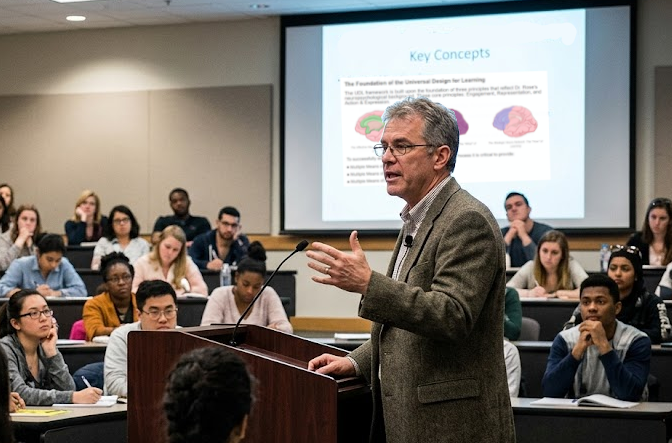
an image of a college professor lecturing in front of a screen showing the UDL brain systems images.
Imagined UDL Lecture
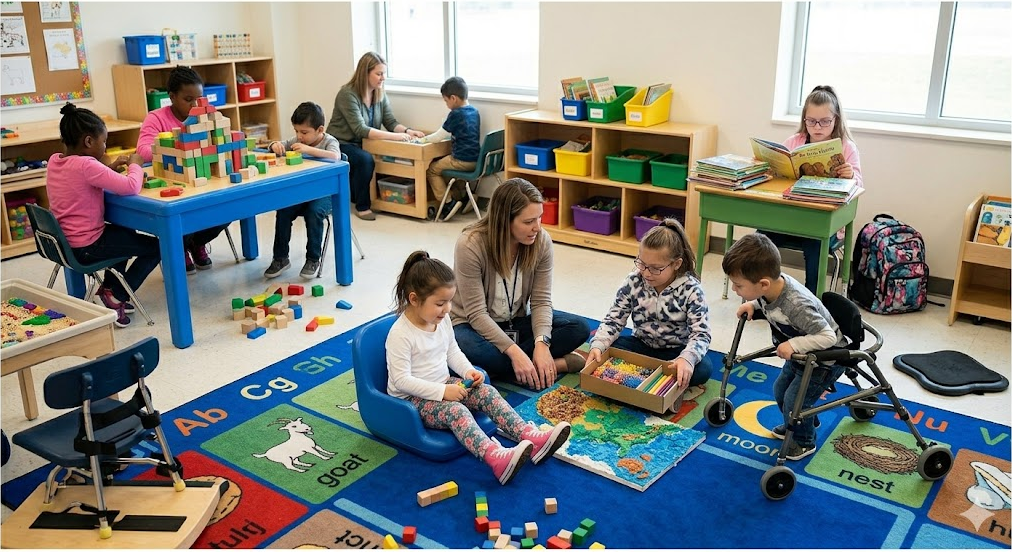
a classroom scene where a range of special needs students are learning.
Image of Intensive Needs Classroom

Lifespace Access Profiles started in classrooms serving students with profound disabilities. In an era when deinstitutionalization and the use of assistive technology were emerging ideas. When assessment and planning tools to work with these populations were nonexistent. 

In these classrooms there were no assumptions about perception, the understanding of cause-and-effect, or purposeful movement at any body site.

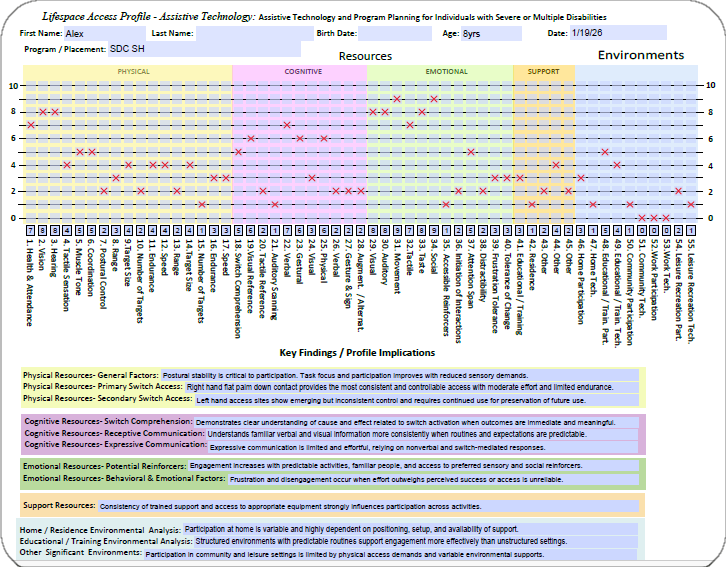
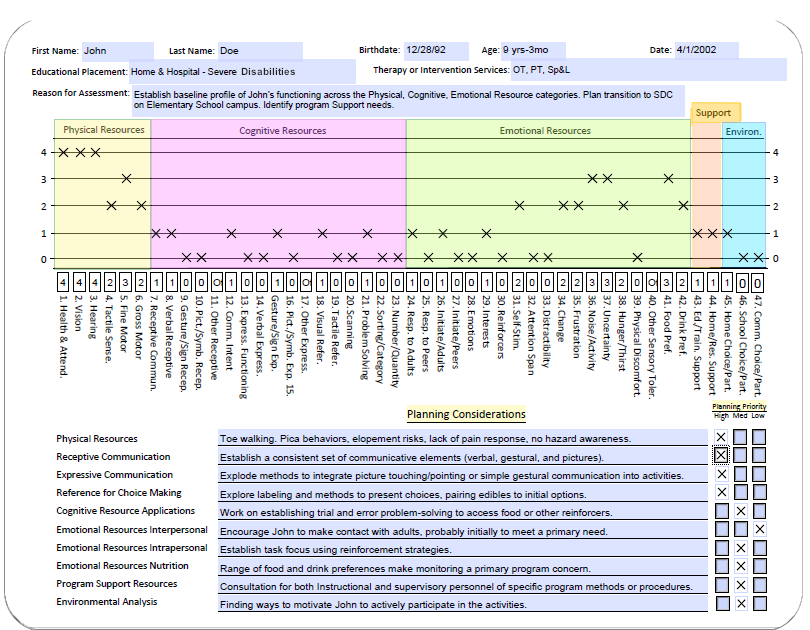
Lifespace Access Fingerprints

Acknowledgement and Thanks

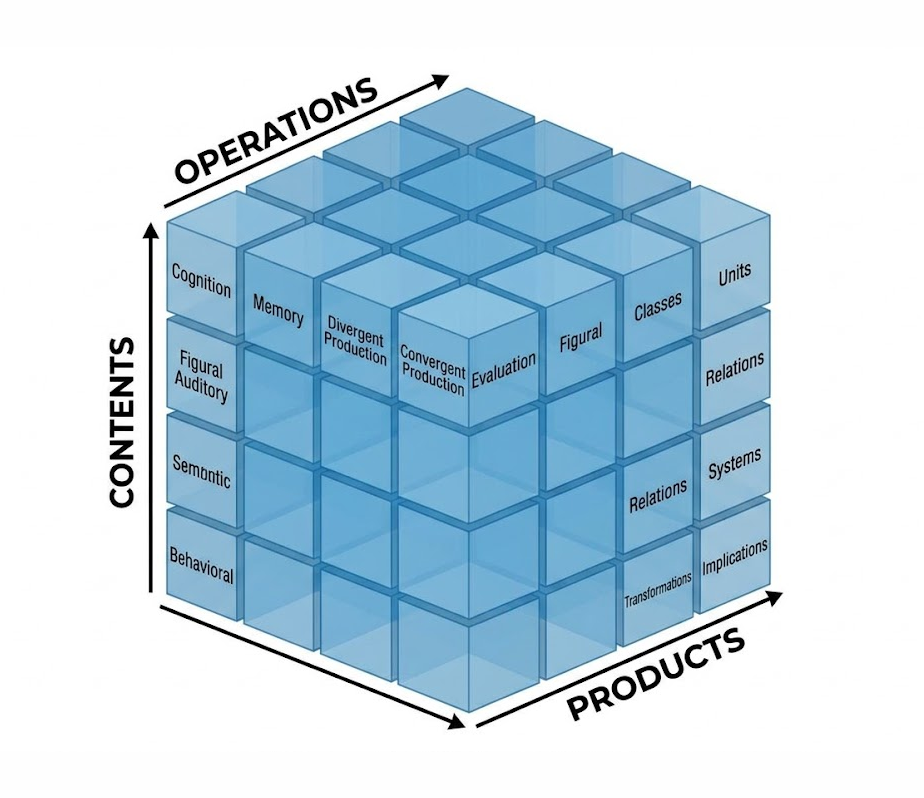
I want to acknowledge the influence of  J. P. Guilford’s works, the Structure of Intellect (SI) model on my concept of human capacity for learning and the factors involved in the process. 

It was originally  published in the journal Psychological Bulletin in a landmark paper titled “The Structure of Intellect” (Vol. 53, No. 4, pp. 267–293, July 1956.)  The SI was arguably the first “elastic” system designed to fit the learner. In UDL terms Guilford may have been the architect of the 150-Factor “Fingerprint”.

A cube shows the three dimensions of Guilford's structure of intelligence model
Guilford's SOI Model

We hope you found this article interesting and perhaps useful in seeing how the Lifespace Access Learner Resources Model (LRM) operationalizes conceptual models like UDL and SOI.

Learn more about Lifespace Access

Lifespace Access Instruments