
Helping Assistive Technology Models Touch the Ground
UX WARNING
(If the following executive summary of this paper feels like a dense “alphabet soup” of institutional frameworks, please bear with me. To ensure these practical tools reach the educators and therapists who need them, we must first satisfy the digital indexers and algorithmic fingerprint engines that map our field.)
Executive Summary: Advancing Assistive Technology Assessment
This article examines the evolution of the models guiding the assistive technology (AT) and learning field, including SETT, QIAT, WATI, UDL, HAAT, and the MPT model. These institutional models, such as the Universal Design for Learning (UDL) and the Matching Person & Technology (MPT) framework, have long historical footprints. They share a pattern of expanding to reflect the challenge of a “Whole Person” approach that accounts for the uniqueness of Individuals and the demands of their Real World situations. This article highlights this expansion and attempts to show how the Lifespace Access Learner Resources Model with its pragmatic roots in directing the integration of assistive technology into the educational programs of learners with very significant physical and developmental challenges had predictive power for these model expansions. By moving beyond theoretical models to “load-bearing” pragmatic application, the Learner Resources Model (LRM) and the Lifespace Access Profile (LAP), in 1993 operationalized the “Whole Person” in the “Real World” orientation advocated by current leaders in the field. This paper presents aspects of the recently released LAP-AT to illustrate the granular behavioral approach and systematic program planning methodology that brings a multidisciplinary student-centered / family-centered approach advocated in current academic literature to AT assessment and planning.
AT Theory to AT Practice - From the Clouds to the Ground
The assistive technology field, like so many others, has been the fertile ground for academic deep thinkers and theoreticists. I have been involved in the field as an active participant and interested observer for more than 40 years.
In this paper I am attempting to share a unique perspective on how the field has evolved. I examine how the Learner Resources Model (LRM) and the Lifespace Access profile processes that underlaid the original Lifespace Access Profile – Assistive Technology Planning for Individuals with Severe or Multiple Disabilities published in 1993 were predictive of the need for expansion of some of the foundational models in learning and the assistive technology fields. In this paper I will be taking some vernacular license and introducing new terms to phenomena I have observed. I use this approach partly to introduce a little humor into what might otherwise be a very dry discussion. Some of you might have caught the signaling of spelling error in the previous paragraph of this paper.
The word “theoreticists” in that first sentence is an example of these new terms. If you attempt to use it in your writing , most word processing applications will consider it a spelling error. I don’t mind. Back in day, when we were building Lifespace Access and the Learner Resources Model, the spell-checkers were still flagging ‘assistive’ as a typo and most had never heard of “lifespace”. That’s what happens when you are out in the trenches doing work before the rest of the world has even decided on the vocabulary. ( An aside, back then I lost the battle to call the field “adaptive” technology. I thought folks needed better tools, not help.) If you hover over on any of these new terms a definition will be provided.
Assistive Technology (AT) - Conceptual Roots
The AT literature in the 1980’s and 90’s was replete with new models for conceptualizing AT’s place in the world. Across the last forty years, and still today, it is filled with calls to expand theoretical frameworks, complete with new circles, cubes, and rings of “interdependence” to account for variables that define the interaction of the Individual and their Lifespace.
Now, before going any further I want to be clear: I respect the work of the professionals, past and present, who work to build the institutions and organizations that carry our field forward. Organizations like RESNA, GAATO, AOTA, and ASHA provide the institutional infrastructure that continues to bring developments in this discipline into the light, and into the field of focus for legislators and regulators. Their efforts provide a common language, going beyond lingua franca to lingua authorita that compels law makers, governing bodies, and agencies to treat assistive technology as a legitimate professional discipline. Their efforts help drive bureaucracies to deliver on the promises made in the IDEA, the ADA and other landmark legislation.
I also understand the ‘publish or perish’ world of academia, perhaps far better than some might imagine. Announcing to the world the next model or derivation of a foundational model is the way to secure a place in the provincial lingua authorita, ensure professional security and relevance, and solidify the legacy of one’s work, ideas, and beliefs.
AT Pioneers
Our field stands on the shoulders of pioneers and heroes. People like Dr. Joy Zabala, who gave us SETT and QIAT. People like Dr. Marcia Scherer, the originator of the MPT (Matching Person & Technology) who authored definitive books on the field and works on a global scale with the United Nations and WHO to promote AT use worldwide. Like Dr.’s Al Cook, and Sue Hussey who gave us the HAAT model. Dr. Penny Reed architect of the WATI team-based approach for evaluating students’ AT needs. MOVE was Linda Bidabe’s gift to the field. And Dr. David Rose and Dr. Anne Meyer, founders of CAST, who presented the UDL to the world, a powerful way of thinking about learning.
Beyond lingua authorita these trail blazers help establish lingua financia. Money makes the world go around, and it has its own dialect. Grant funding for research and development, governmental funding for programs, private gifts, and endowments, speaking fees, and even sales provide the lubricant that makes forward progress possible.
AT's Development - A Historical Perspective
Given my familiarity with the AT field and its roots, and having been a student of the literature, I have had a good seat to observe patterns in its development.
Points of Origin for AT models: Real Problems
One of these patterns is associated origination points of our conceptual models. The many models share a common feature. Behind the authoritative acronyms of SETT and MPT were real people trying to solve, or at least address, a particular real-world problem, or systemic barrier. Joy’s SETT was her first run at addressing the selection of assistive devices responsibly. Dr. Scherer’s MPT sprang from her desire to understand device abandonment. In those early years, the financial and political stakes were high.
Fiscal Realities: considerations in the early AT field
Let’s talk historic lingua financia:
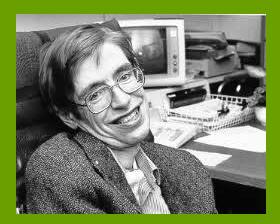
Everyone knows Dr. Stephen Hawking, he is famous for his use of his synthesized voice. He started using Walter Woltosz’s Equalizer software via the Speech Plus CallText 5000. At that time, the cost of a set up like his was easily over $5,000, or about $15,000 in today’s lingua financia.
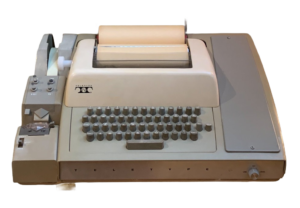
Prentke Romich Company’s (PRC) first product was an adapted teletype machine but their flagship micro-processor products, like the Express 3 and the Touch Talker, had hardware cost ranging from $3,000 to $8,000. In today’s money that is the equivalent of asking a school district or family to spend $10,000 to over $25,000 on a single purchase.
Phonic Ear’s HandiVoice was released in 1978, was a miracle breakthrough both technologically and financially, as one of the very first portable devices to use synthesized speech. It hit the market at around $2,000. More complex, custom-built electronic communication systems of that era could range anywhere from $5,000 to over $15,000 (and occasionally upwards of $50,000 for highly specialized environmental control integrations).
Pragmatic Application: Solving Real Problems leads to functional products
It is worth noting that Walter Woltosz’s Equalizer software stemmed from his efforts to provide his own mother with a voice when ALS took hers. The very first communication device Barry Romich and Ed Prentke, an engineering student and a hospital engineer working in a basement, produced was a custom typing system built for a man who had sustained a severe spinal cord injury. (That “real need first” showing up again. It is so much stronger than the solution looking for a problem to solve methodology.)
High Stake Recommendations
As background, in those early days the “medical necessity” of these devices was not universally recognized by insurance companies, or Medicare. Educational law was only beginning to recognize the need for direction for Special Education services.
Making AT recommendations with those stakes, in both the terms of fiscal responsibility and professional reputation, would make most people sweat.
Selective Critique of Historic AT Paradigms - Onto Thin Ice
I know this next section may be seen as unfounded criticism of established beliefs and great minds. (And this from someone who does not even have a doctorate.)
Here is what I observed happening when pioneers start to analyze what they are trying to achieve, and what it takes to achieve those goals, so they can effectively communicate that knowledge to others. Speaking from experience, this process can be quite taxing. They have often found themselves attempting to answer the “but, what about this…” attacks that inevitably come in the academic peer review arena.
My hero worship may show in the next couple of examples.
Dr. Zabala’s wisdom was to stand by her foundational SETT framework while simultaneously expanding her thoughts and ideas to cover both more people and more conceptual space. Her doctoral dissertation introduced the QIAT, cementing her lingua authorita in AT history.
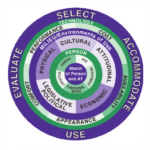
Dr. Marica Scherer introduced the MPT, bearing the iconic image of her model. Both the model and the image convey her understanding of the complexity of AT process. (I have to admit, my first viewing of her visual rendering of the MPT model elicited lyrics from Johnny Cash’s great hit “Ring of Fire.” Put that on a shield, I would have been happy to carry it into battle.)
A Word of Caution - Lingua Spread Ahead

What I have also observed over the course of years is that understandable models and methods sometimes get lost in the ever-growing explanations and answers to those “what ifs.” In the academic arena, the perils of lingua abundis loom large, and the trap of lingua obscuris hovers.
With profound apologies, what does “biopsychosocial” mean? Use it in an IEP meeting, I dare you.
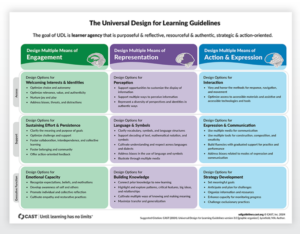
And at the risk of drawing heavy academic fire, some of the descriptive materials associated with the expansion of the UDL have become amazing word-salads.
Expansion of Existing AT Models
Another interesting and commonly occurring phenomenon that is driven both by genuine intellectual curiosity and the publish-or-perish lingua authorita mandate is the modification, elaboration, or reimagination of existing, established, models.
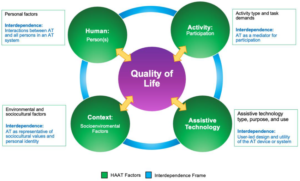
Consider the HAAT (1995) model, a concise model of the relationship of three conceptual elements, the Human, the Activity, and Assistive Technology within a situational Context. Three decades later it holds a center point in the field and a place in the I-HAAT framework in Dr. Lee’s (2022) explanation of the “Interdependence” of factors contributing to AT outcomes.
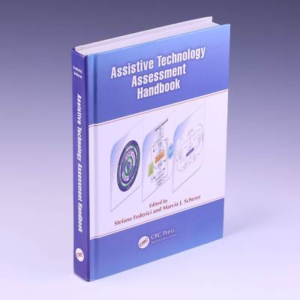
From its genesis in Dr. Scherer’s 1985 final report to the National Science Foundation, the MPT model has stretched its influence all the way to the WHO’s 2017 GATE 5P Framework. Along the way, she teamed with Dr. Federici, a leading voice in developmental neuropsychology, to co-edit the Assistive Technology Assessment Handbook (2012). It is a collection of academic wisdom from more than four dozen contributors with an incredible array of stakes in AT use and development. Even for an OG like myself, it is a megadose of lingua authorita. It is dedicated to the ‘psychotechnologists’ of today and the future. (I am coming from a different perspective and would like to dedicate this article to the Parents, Special Education teachers, Speech and Language therapists, OTs, PTs, School Nurses, and Paraprofessionals who wipe the drool off the laminated label on the Big Red switch and get on with it.)
Person-Centered: People's Lives Come to AT Models
Encouragingly, I have also had the privilege to watch almost every model, theory, and method associated with AT and Learning expand to have “Whole Person” & “Person-Centered” orientations that acknowledges “Individuals” must deal with challenges in unique “Real Worlds”
Again, to a few of my personal heroes.
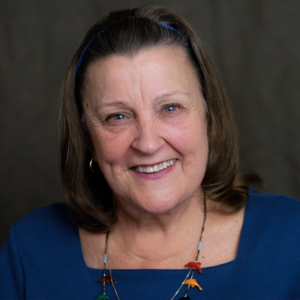
In her later works and presentations, Dr. Joy Smiley Zabala made this powerful statement: “I used to think I was passionate about assistive technology. What I’ve learned is that I’m very passionate about participation and learning. This is not about the technology. This is about people’s lives.”
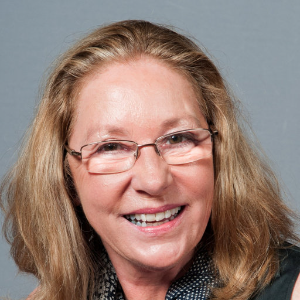
In 2022 Dr. Marcia Joslyn Scherer was asked to make the prestigious Gresham address. The title of her address was, “Technology is the Answer, But That’s Not the Question.” The core premise of her address was that while assistive and rehabilitation technologies provide countless “answers” (tools and devices), deployment of those tools and devices aren’t solutions in isolation. She told the assembled audience that the focus should not just be on successfully using a device, but on the individual user’s quality of life, well-being, and freedom to choose how they participate in their communities.

Dr. David Hamilton Rose and CAST in their most recent update of the Universal Design for Learning codified the need to consider the complex concept of the “who” of learning. “Previous iterations have emphasized the remarkable variability among learners in terms of how they engage with learning… how they perceive information… and how they act on and express what they know. This current iteration also emphasizes learners’ multiple and intersecting identities as part of variability. This ‘who’ of learning is a dimension that is woven across all three UDL principles.” (A little too lingua authorita for my taste Dr. Rose, but welcome fellow traveler.)
We Anticipated Your Arrival: We Baked You a Cake
PERFECT RECIPE
The lingua authorita tells us assistive technology efforts are driven by a complex alphabet soup of theoretical frameworks and mandates. These new models demand that assessment be collaborative, environmentally engineered, sensory-aware, and driven by hard data rather than subjective guessing. The theoreticians have spent the last three decades building the “perfect recipe” for individualized program planning.
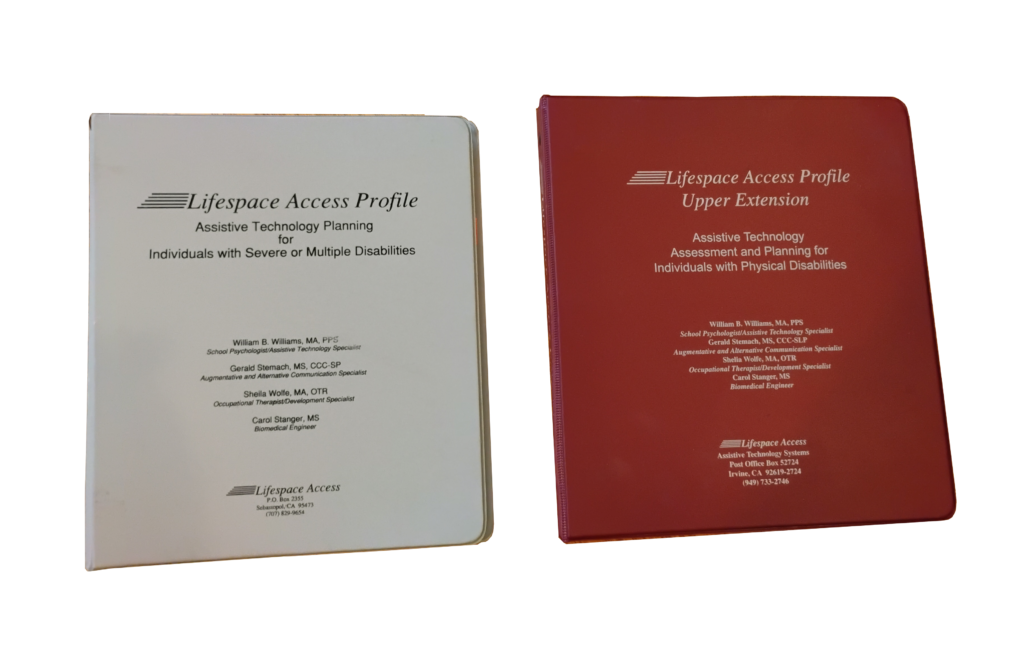
The Lifespace Access Profile &
the Lifespace Access Profile – Upper Extension
were published in the early 1990s. The aesthetic of our hard copy binders might seem a little quaint, but the instruments and more importantly the intellectual model they were built upon has been waiting in the bakery rack ready-to-serve for three decades. That model didn’t just align with modern mandates; it operationalized them, step-by-step, turning theoretical requirements into a documented, tactical reality.
Expert AT Wisdom and Current Thought: Alignment of the Lifespace Access Model
The format for this comparison of the LAP & LRM to Expert wisdom takes a “They say” – “We do that” approach. Images show how the sequential elements of LAP-AT meets or exceeds expert recommendations.
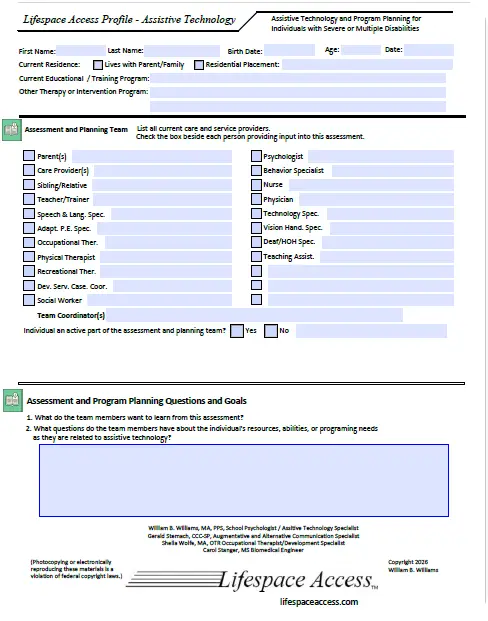
Multidisciplinary Team
Dr. Joy Zabala (SETT, 1995): “The SETT Framework is designed to promote collaborative decision-making in all phases of assistive technology service design and delivery, ensuring shared knowledge and shared responsibility.”
Dr. Penny Reed (WATI, 2007): “We recommend that any AT assessment be completed by a team, not an individual. The team should include individuals from different disciplines with different perspectives and should always include the parent or parents. When the student is able to understand and contribute to the assessment, he or she should also be an active participant in the decision making.
Assessment: Purpose & Goals
Quality Indicators for Assistive Technology (QIAT, 2012)
“Assessment must be directed by specific questions that link individual needs to instructional outcomes to ensure clinical relevance.”
BACKGROUND QUESTIONS
History of AT Use
Dr. Marcia Scherer (MPT, 2002): “Assessment must account for the user’s history and current technology integration to determine the potential for functional generalization and continued use.
Desired Outcomes & Functional Impact
Dr. Joy Zabala (SETT, 1995): “The ‘best practice’ for AT planning is to anchor the intervention in the user’s and the family’s prioritized outcomes for increased autonomy in daily routines.”
Learning Conditions & Style
Dr. Rose & Dr. Meyer (CAST/UDL, 2002)
“Effective instruction is contingent upon identifying the learner’s preferred sensory modalities and environmental parameters, which significantly influence information acquisition.”
Personal Description
Quality Indicators for Assistive Technology (QIAT, 2012)
“A comprehensive narrative description provides the contextual ‘glue’ that allows team members to align their specific professional goals with the individual’s lived experience.”
LAP-AT
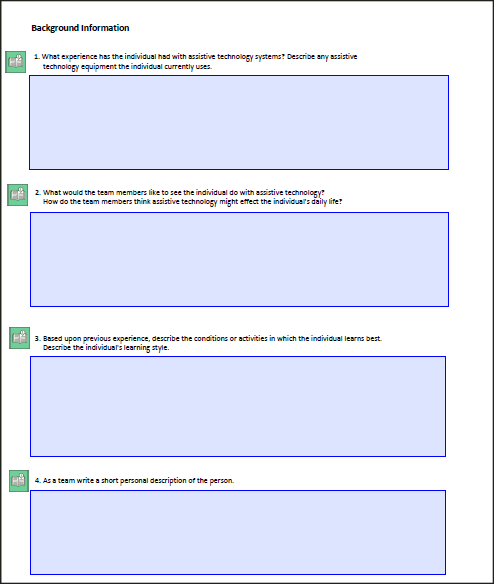
LAP-AT Protocol Page
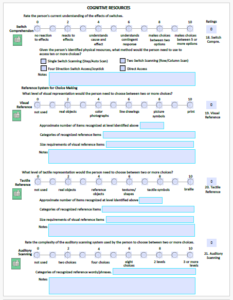
LAP-AT Manual Page
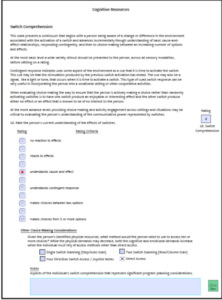
INTEGRATED INTERACTIVE USER MANUAL
Ease of Use & Educationing Users
Instructional Design & E-Learning (Modern Best Practices): “Just-in-time learning, or providing information at the exact moment of need, is the most effective way to ensure consistency, reduce cognitive load, and improve application of complex protocols.”
Assurance of Interrater Reliability
Interdisciplinary Collaboration (Evidence-Based Practice): “Reliability in assessment across a diverse team requires a common vocabulary and standardized criteria to ensure that all team members are observing and evaluating the same behaviors.”
Dr. Joy Zabala (SETT, 1995): “The SETT Framework is designed to promote collaborative decision-making in all phases of assistive technology service design and delivery, ensuring shared knowledge and shared responsibility.”
LAP-AT Rating Scale Switch Comprehension

Observational Precision
Behavioral Assessment Methodology (Evidence-Based Practice): “Effective assessment requires moving beyond vague labels to specific, observable descriptions. By defining the frequency, intensity, and context of behavior, we can predict function and design precise interventions.”
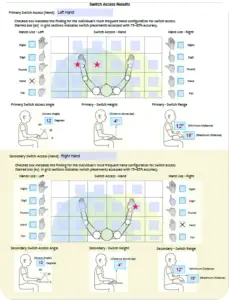
Precision of Switch Site Identification
Dr. Marcia Scherer (MPT, 1993): “Technological success depends on the goodness of fit between the user’s physical abilities and the interface. This fit must be assessed in the context of the user’s daily activities and physical posture.”
Dr. Al Cook & Sue Hussey (HAAT, 1995):
“The Human/Technology interface must be matched to the user’s motor capabilities. A failure to identify the most stable and reliable access site often leads to unnecessary fatigue and eventual device abandonment.”
LAP-AT Switch Access Sites
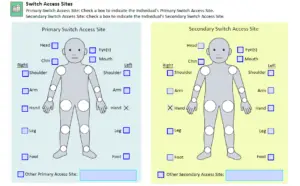
LAP-AT Display Positioning
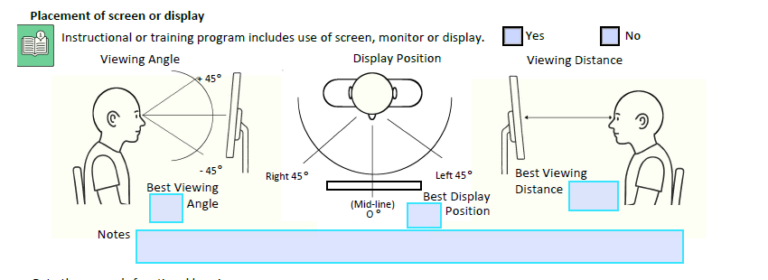
Visual Access & Display Positioning
Dr. Al Cook & Sue Hussey (HAAT, 1995): “The sensory component of the human/technology interface is critical. If the information display cannot be perceived by the user, the activity cannot be successfully completed.”
Collaborative Review and Priority Setting
To paraphrase Dr. Penny Reed (WATI, 2009)
A good team meeting is one in which all the members… have a voice in making decisions. The team determines the priorities, talks them through until all are in agreement, and then asks, ‘Okay, what do we need to provide so that this student can meet those goals? Where are the challenges? What things are we most concerned about?’ For those specific tasks and activities, they then look at assistive technology.
LAP-AT Team Meeting
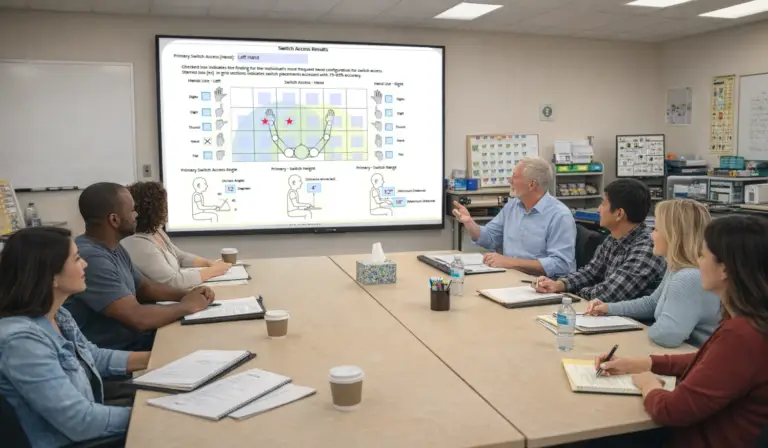
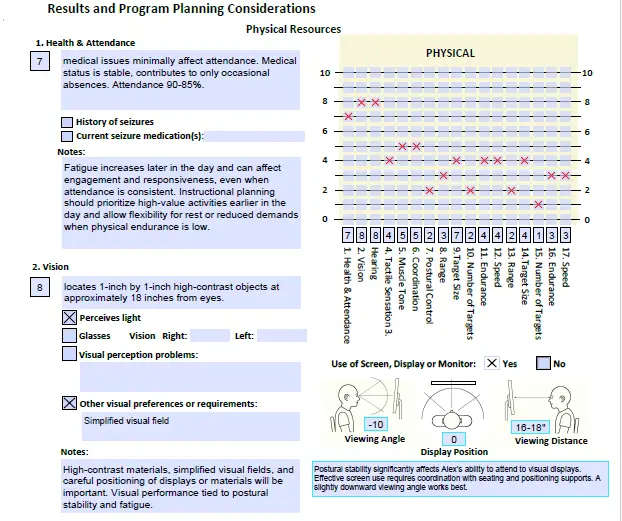
Priority Setting – Physical Reources
Dr. Joy Zabala (SETT Framework, 1995): “Decisions about Tools… are most valid when they are based not on knowledge that one person has (or believes they have) but based on an agreed-upon, mutually valid shared knowledge of the student, the environments, and the task.”
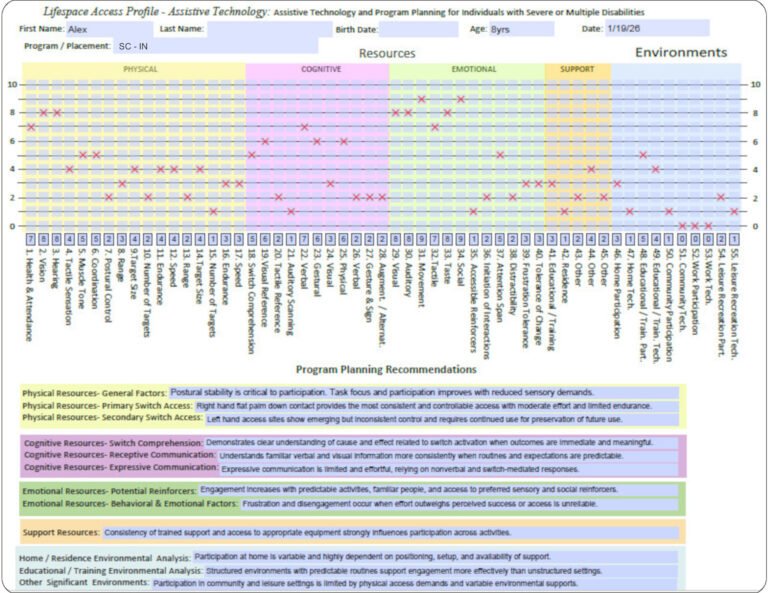
LAP-AT FINDINGS & PRIORITIES
PHYSICAL RESOURCES
COGNITIVE RESOURCES
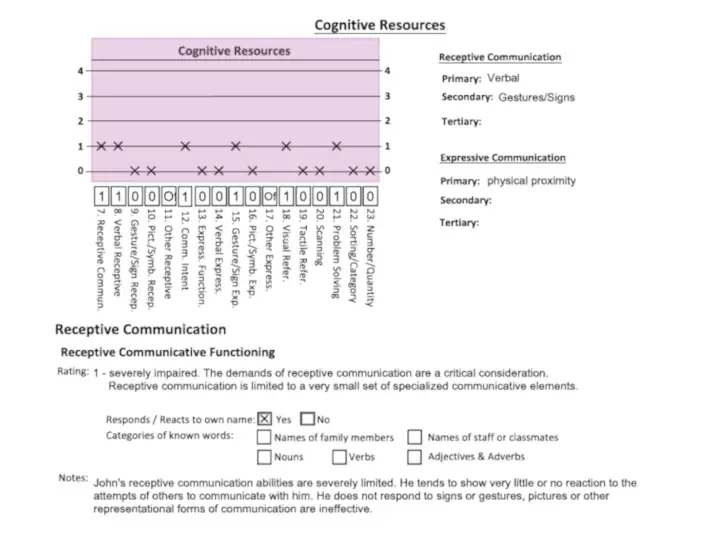
Priority Setting – Cognitive Resources
Dr. David Rose & Dr. Anne Meyer (UDL, 2002): “Learners vary in how they perceive and comprehend information. Designing for accessibility requires understanding the variability in how individuals process input and demonstrate knowledge.”
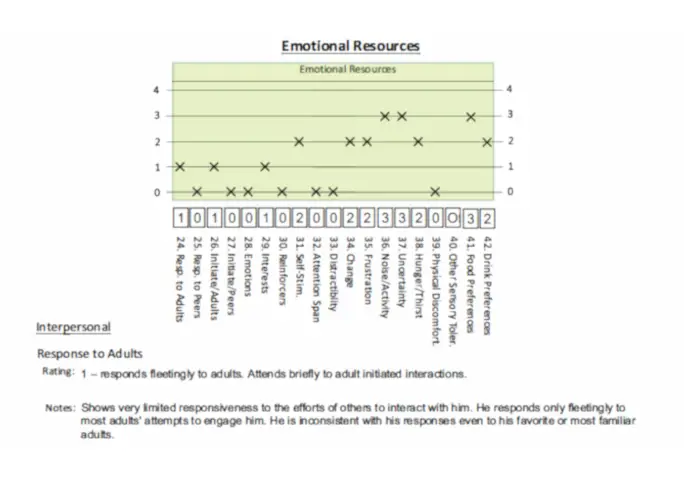
Priority Setting – Emotional Resources
Dr. David Rose & Dr. Anne Meyer (UDL, 2002): “Affect is the ‘why’ of learning. Students are most engaged when the environment is matched to their emotional needs, interests, and preferences, allowing them to remain regulated and focused on the task.”
EMOTIONAL RESOURCES
SUPPORT RESOURCES
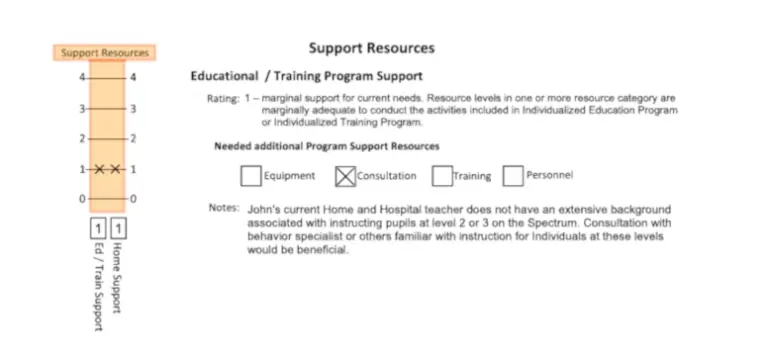
Priority Setting – Support Resources
Dr. Marcia Scherer (MPT, 2002): “The environment is the most significant factor in whether technology is utilized or discarded. Support resources must be identified and integrated into the individual’s daily life to ensure long-term success.”
Dr. Joy Zabala (QIAT, 2005): “Effective assistive technology services require more than just device selection; they require a sustainable system of support, including ongoing personnel training, equipment maintenance, and administrative commitment.”
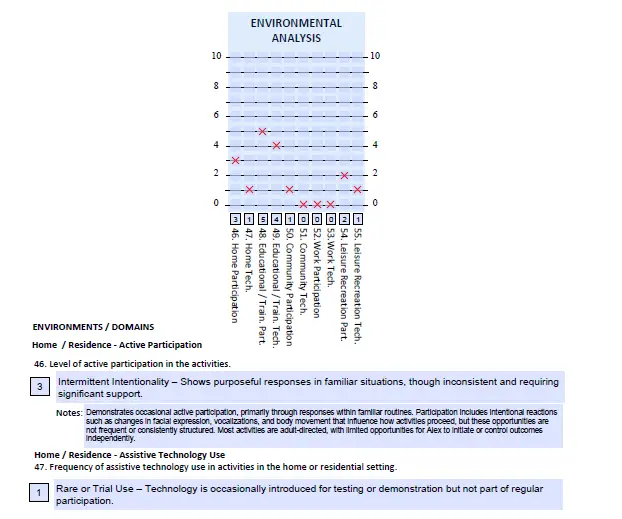
Priority Setting – Active Participation & AT USE
Dr. Marcia Scherer (MPT, 2002): “Quality of life is determined by an individual’s ability to participate in their chosen environments. Technology is only a ‘solution’ when it facilitates active, sustainable engagement across home, school, and community settings.”
ENVIORNMENTAL ANALYIS
Specifications for AT Progress
“Control, this is Earthbase 1. Touch down, the models have landed”
Here is the plan!
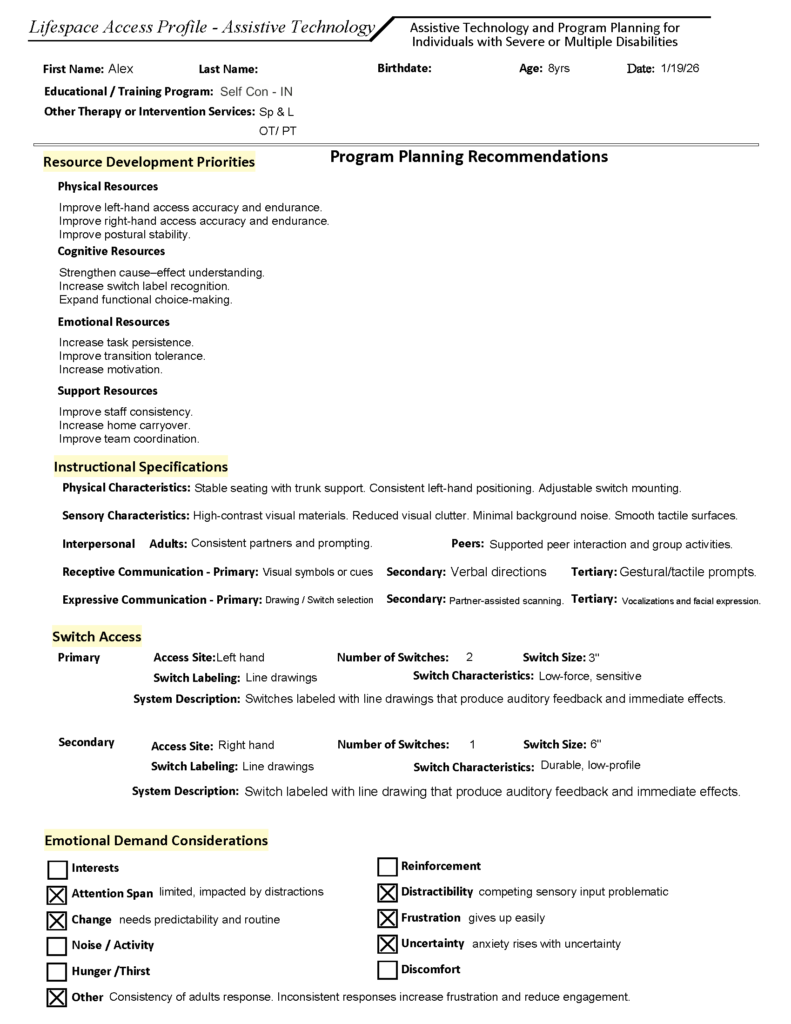
Resource Development Priorities
- Physical Resources
- Cognitive Resources
- Emotional Resources
- Support Resources
Instructional Specifications
- Physical Characteristics
- Sensory Characteristics
- Interpersonal
- Adults
- Peers
- Communication
- Receptive communication
- Expressive Communication
Switch Access
- Primary
- Access Site
- Switch Label
- Number
- Size
- Characteristics
- Secondary
- Access Site
- Switch Label
- Number
- Size
- Characteristics
Emotional Considerations
- Interests
- Attention Span
- Change
- Noise / Activity
- Hunger / Thirst
- Reinforcement
- Distractibility
- Frustration
- Uncertainty
- Discomfort
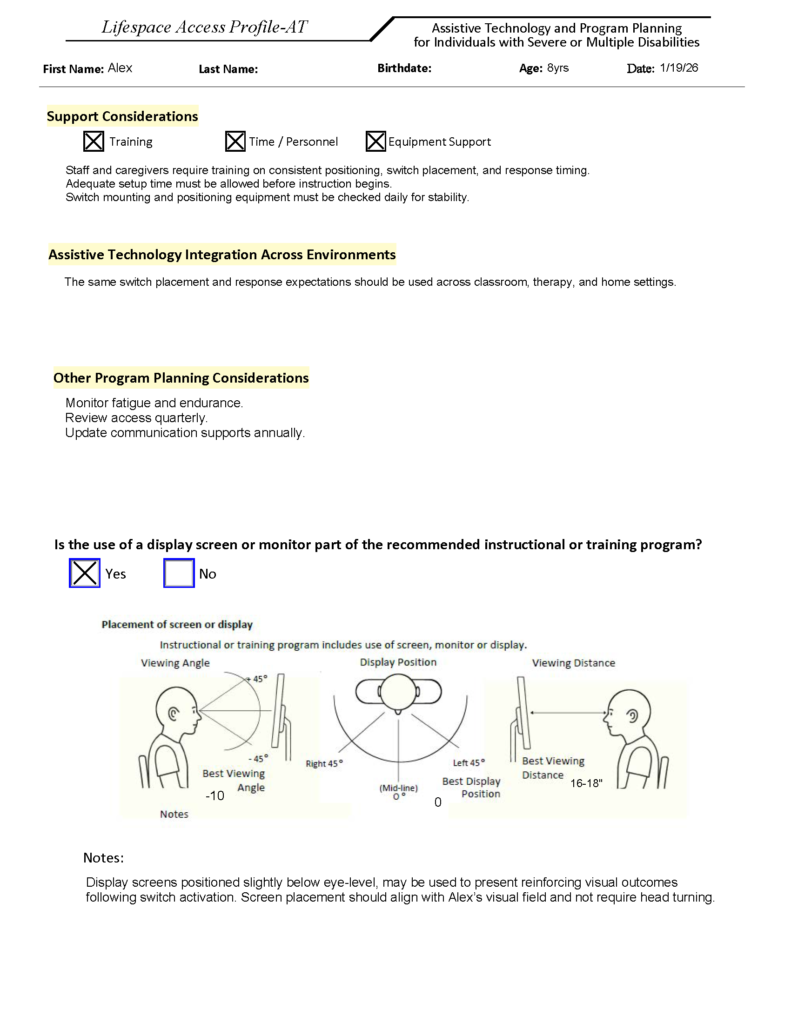
Support Resources
- Training
- Time / Personnel
- Equipment Support
Assistive Technology Use
Display Use
Please excuse me; I have to head for an IEP.
It should be a productive one.
Before I go, I am wondering: how well do you think the LAP and the LRM (1993) anticipated and operationalized the directions for the AT field.
Thank you for visiting. Our goal was to provide a big dose of Lingua Directus.